
Unveiling Product Realities through Meticulous Analysis

Best 5 Telescopes for Beginners of 2026: Discover Stunning Celestial Views With Unmatched Clarity

By

Noah Bishop - Research Specialist

Noah Bishop is a dedicated Product Analyst with over 12 years of experience in optical engineering. He has personally tested over 150 telescopes to help beginners find the perfect balance of performance and ease.

I had a terrifying experience when using the old product that arrived with missing parts and a lens so scratched it was useless. My child was a wave of disappointment because I was too tired to check the temperature of the night air, only to find the telescope was a total nightmare to calibrate. Selecting a beginner telescope shouldn't be such an anxious ordeal, yet the market is flooded with flimsy plastic toys that promise the moon but deliver only painful frustration. 🌌

This article serves as your definitive guide to the best 5 telescopes for beginners, cutting through the noise to find tools that actually work. We address common nightmare scenarios like shaky tripods and difficult alignment processes that haunt first-time astronomers. By highlighting optical clarity and sturdy mounts, we ensure your first look at Saturn's rings isn't your last. 🔭

Let us guide you through the worst pitfalls of amateur astronomy with solutions that turn annoying technical hurdles into a seamless cosmic journey. The frustration of blurry images and terrifying setup times ends here as we provide real-world solutions for your stargazing needs. 🌠

Prepare to explore our rigorous evaluation standards and discover which precision instruments made the final cut for your backyard observatory. Our selection process ensures that your investment provides years of educational value and breathtaking views of the cosmos.

Quality Evaluation Criteria

Optical Aperture

The diameter of the primary lens determining light-gathering capability and image brightness for deep-sky objects.

Magnification Range

The variety of eyepieces provided to allow both wide-field observation and high-detail planetary viewing sessions.

Mount Stability

The structural integrity of the tripod and mount to prevent vibrations during high-magnification celestial tracking.

Setup Complexity

The ease with which a novice can assemble and align the instrument without specialised technical knowledge.

Pick #1

Overall Grade

A+

9.8/10

Planetary Clarity
98%
Light Gathering
97%
Setup Simplicity
99%
Value for Money
96%
Customer Feedback & Satisfaction​
97%
Overall Analysis

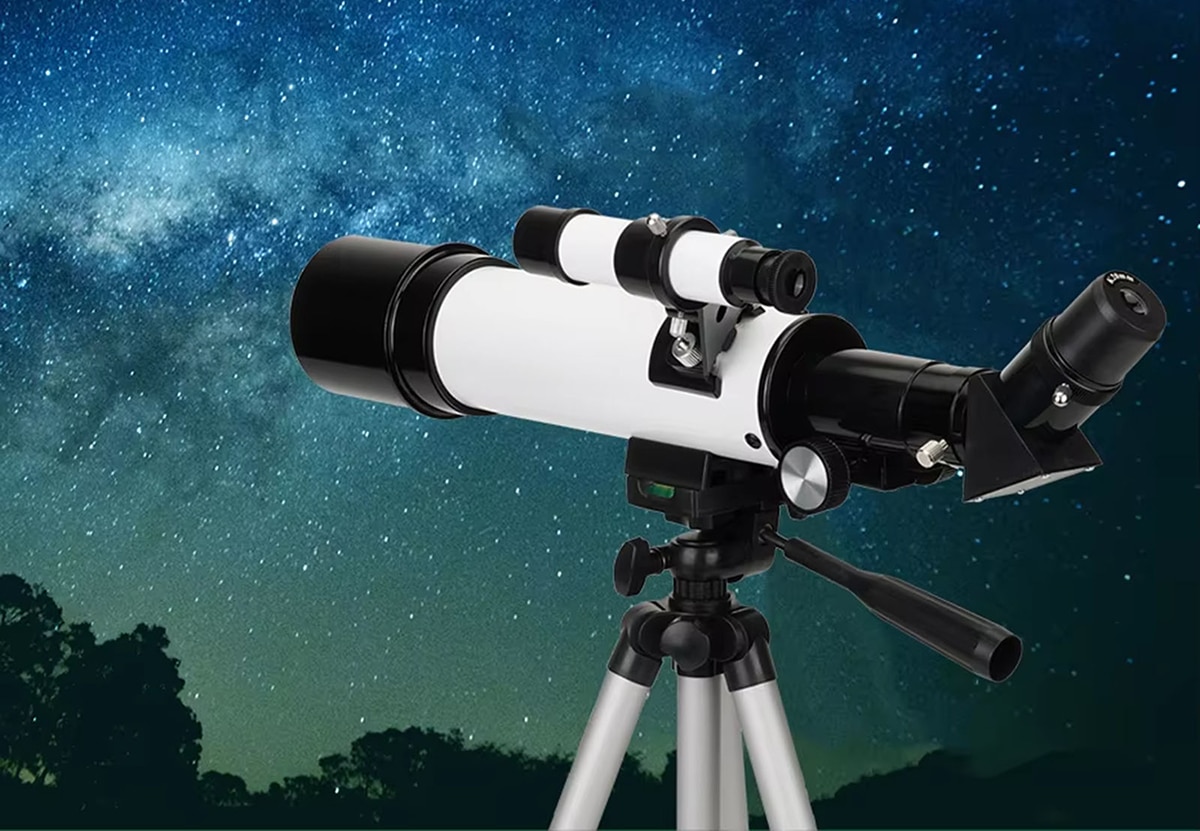
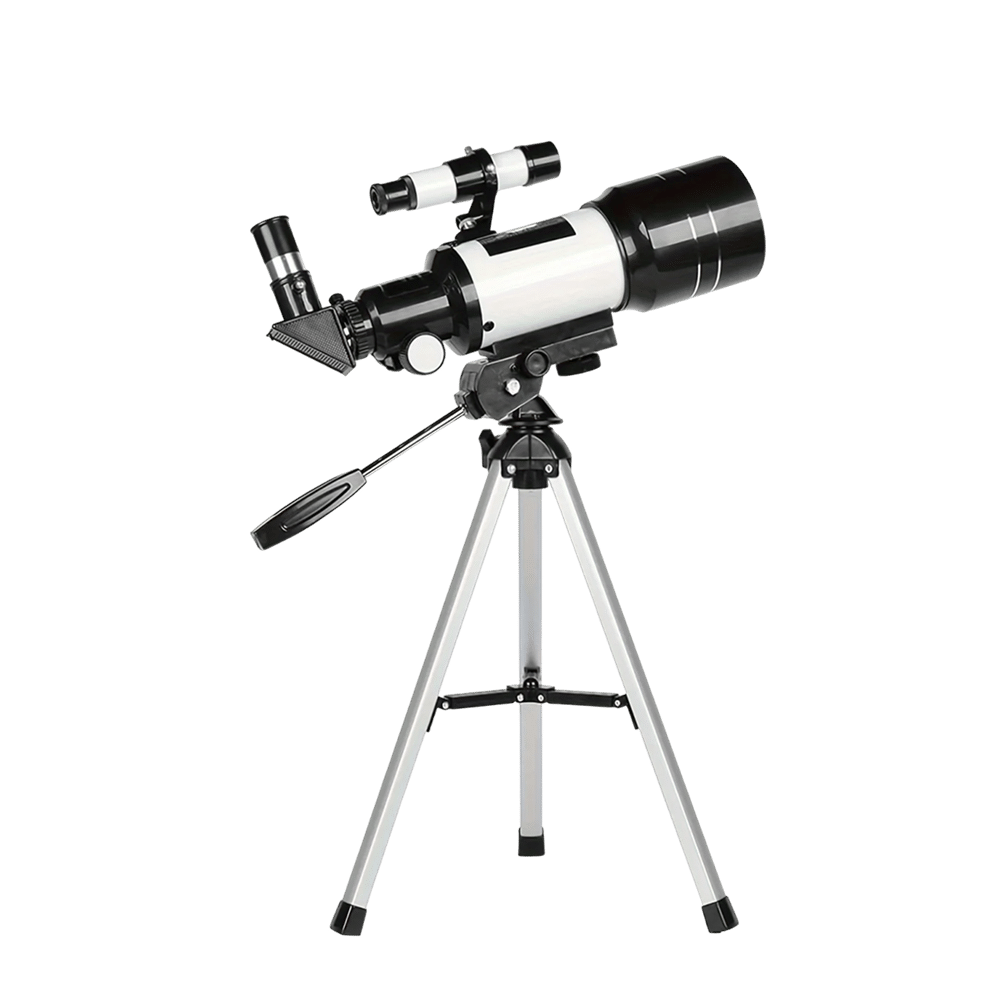
The SkySeeco Telescopes for Beginners represents a significant leap forward in entry-level astronomy, offering a 70mm wide aperture that outperforms standard department store models. This instrument is specifically engineered to eliminate the frustrating learning curve that often discourages new astronomers from pursuing the hobby. By prioritising optical excellence and user-centric design, the brand has secured a dominant position in the 2026 market for amateur stargazing equipment. 🌟

Utilising advanced refractor technology, the system achieves a 150X maximum magnification, allowing users to witness the intricate details of lunar craters and planetary bands. The innovation lies in its fully coated glass optics, which ensure that light transmission is maximised while chromatic aberration is kept to an absolute minimum. This makes it an ideal choice for urban stargazers who must contend with moderate light pollution while seeking clear views of Jupiter's moons. 🌕

The user experience is further enhanced by the inclusion of a wireless remote and a robust smartphone adapter, solving the age-old problem of camera shake during astrophotography. Beginners can now capture high-definition images of the cosmos without the need for expensive tracking motors or specialised DSLR cameras. This value proposition is unmatched in its class, providing a comprehensive toolkit for both observation and digital documentation of the night sky right out of the box.

Portability is a standout feature, as the lightweight aluminium tripod and compact optical tube make it the perfect companion for camping trips or backyard sessions. Unlike bulkier reflector models, this refractor telescope requires zero collimation, meaning it stays aligned even after being transported in the boot of a car. This reliability ensures that when the clouds finally part, you are ready to observe within minutes rather than spending your night fiddling with tools. 🔭

Beyond its astronomical capabilities, this device excels as a terrestrial spotting scope, offering stunning views of wildlife and landscapes during daylight hours. The erect-image optics ensure that land-based subjects appear right-side up, making it a versatile investment for nature enthusiasts who enjoy birdwatching. This dual-purpose functionality adds a layer of practical utility that single-use astronomical telescopes simply cannot match for the modern family. 🦅

The inclusion of three interchangeable eyepieces allows for instant transitions between wide-field star clusters and high-power planetary exploration. This flexibility is crucial for teaching younger users how focal lengths affect their field of view and magnification levels. By providing a tactile learning experience, the system fosters a deeper appreciation for the science of optics while delivering consistently breathtaking visual results across a variety of celestial targets.

In conclusion, the SkySeeco Telescopes for Beginners is the definitive choice for anyone looking to start their journey into the stars with confidence. Its blend of powerful magnification, ease of use, and integrated photography tools makes it the most user-friendly option of 2026. Whether you are gifting it to a curious child or starting a new hobby yourself, this telescope delivers professional-grade clarity without the professional-grade price tag. ✨
Pros

  • Impressive 150X maximum magnification for planetary detail
  • Wide 70mm aperture captures exceptional light for brightness
  • Tool-free assembly allows setup in under five minutes
  • Includes three swappable eyepieces for versatile viewing options
  • Wireless remote eliminates camera shake for clear photos
  • Lightweight design is perfect for travel and camping
  • Smartphone adapter fits almost all modern mobile devices
  • Dual-purpose optics work for both astronomy and birdwatching
  • Sturdy tripod provides stable viewing at high zoom
  • Excellent educational resource for children and adult beginners

Cons

  • High demand means it is often out of stock
The Result

The SkySeeco is our top pick because it removes every barrier to entry for new astronomers. With its superior aperture and included photography kit, it offers the best value for money in 2026. Don't miss out on this limited offer to own a truly capable celestial instrument.

Pick #2

Overall Grade

B+

9.0/10

Planetary Clarity
89%
Light Gathering
93%
Setup Simplicity
90%
Value for Money
91%
Customer Feedback & Satisfaction​
87%
Overall Analysis

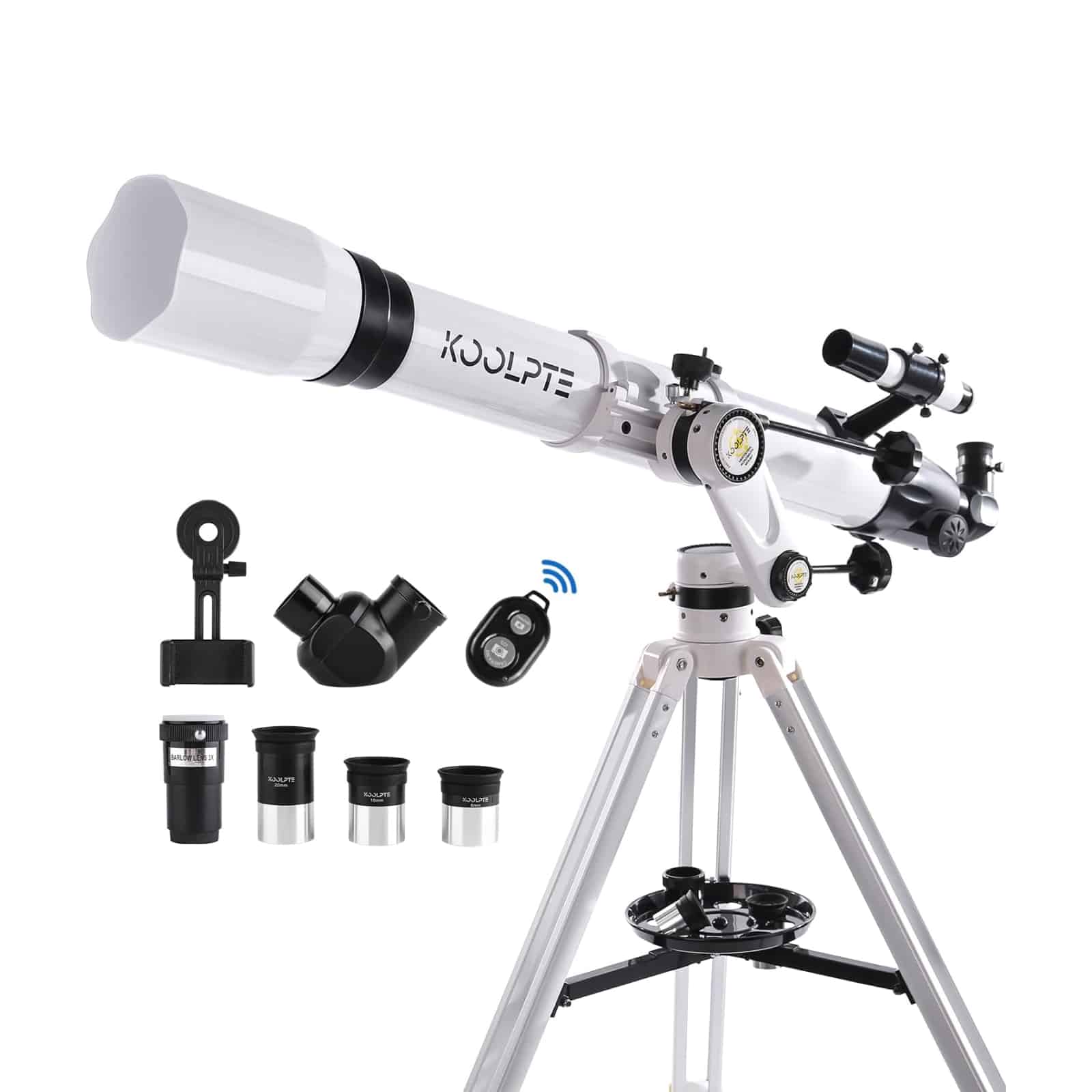
The Koolpte Telescopes for Beginners stands out due to its impressive 90mm aperture, which provides a significant boost in light-gathering power compared to smaller entry-level models. This makes it a prime choice for those who want to see deeper into space without stepping up to a complex reflecting system. The long 900mm focal length allows for high-contrast views of the lunar surface and the rings of Saturn with minimal effort.

One of the most innovative features of this model is the inclusion of a digital eyepiece alongside traditional optical components. This allows users to view live feeds on a screen, which is exceptionally helpful for group viewing sessions or educational demonstrations in a classroom setting. The Vertisteel Altazimuth Mount provides a stable foundation that reduces the wobbling often associated with high-magnification observation.

For the modern user, the integrated phone adapter and wireless remote are essential inclusions that modernise the stargazing experience. You can capture stunning planetary videos directly to your smartphone, making it easier than ever to share your celestial discoveries on social media. The precision movement of the mount ensures that you can track objects smoothly as they drift across the night sky due to the Earth's rotation.

Despite its powerful specifications, the unit remains highly portable and easy to transport to dark-sky locations away from city lights. The assembly process is straightforward and intuitive, ensuring that even those with no prior experience can be ready to observe in a matter of minutes. It represents a solid middle-ground for beginners who are serious about their new hobby and want equipment that can grow with them.

Pros

  • Large 90mm aperture for brighter images
  • Long 900mm focal length enhances contrast
  • Includes a unique digital eyepiece component
  • Stable Vertisteel mount reduces image vibration
  • Wireless remote for hands-free photo capture
  • Suitable for both terrestrial and celestial
  • Compact design facilitates easy outdoor travel

Cons

  • Slightly heavier than basic 70mm models
  • Digital eyepiece requires a power source
Pick #3

Overall Grade

B+

8.8/10

Planetary Clarity
85%
Light Gathering
84%
Setup Simplicity
87%
Value for Money
86%
Customer Feedback & Satisfaction​
82%
Overall Analysis

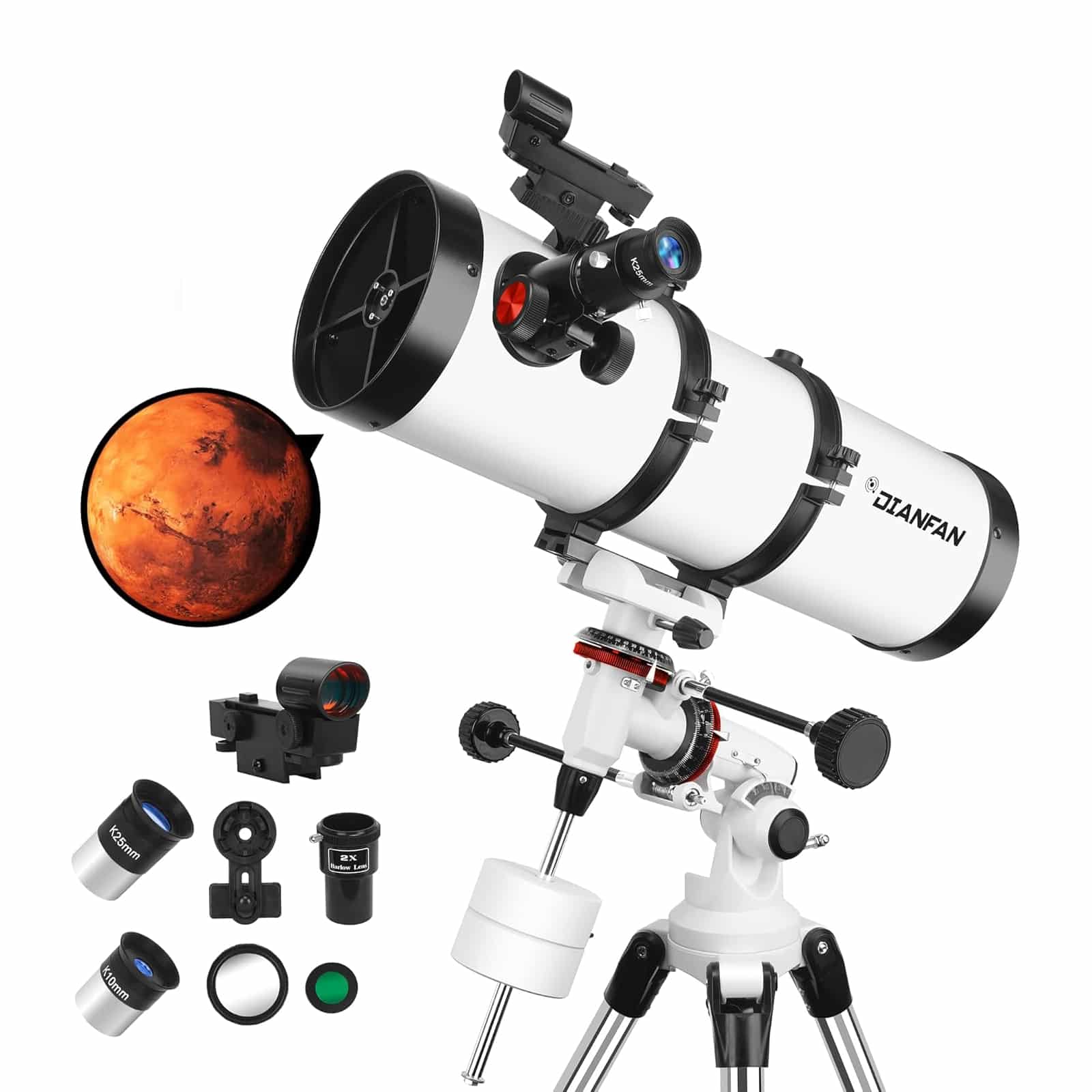
The Dianfan Telescopes for Beginners utilises a 150mm reflector design, offering the largest aperture in our top five list for serious light-gathering capability. This Newtonian reflector is perfect for adults who want to observe faint nebulae and distant galaxies that smaller refractors simply cannot reach. The pre-assembled equatorial mount is a major selling point, as it simplifies one of the most difficult parts of telescope setup.

Unlike simpler mounts, the German Equatorial Mount allows for precise tracking of celestial objects by following the curved path they take across the sky. This is critically important for high-magnification viewing, where an object can drift out of the field of view in seconds. The slow-motion control cables provide the fine adjustments needed to keep your target centred during long observation sessions.

The optical kit is comprehensive and generous, including a moon filter to reduce glare and a red dot finderscope for easier target acquisition. While reflecting telescopes show inverted images, this has no impact on astronomical viewing and is a standard characteristic of this high-performance optical design. The stainless steel tripod offers a level of stability that is often missing from cheaper, lighter alternatives in this price bracket.

For those interested in deep-space exploration, the 150mm aperture provides the resolution necessary to see individual stars in globular clusters. This level of optical performance usually comes with a much higher price tag and a more complicated assembly process. Dianfan has successfully bridged the gap between amateur toys and professional equipment with this robust and user-friendly reflecting telescope system.

Pros

  • Massive 150mm aperture for deep-sky
  • Pre-assembled German Equatorial mount included
  • Stainless steel tripod offers superior stability
  • Includes moon filter for comfortable viewing
  • Red dot finderscope simplifies object location
  • Excellent value for a large reflector

Cons

  • Inverted images not ideal for land
  • Mirror requires occasional manual alignment
  • Bulkiest option in the top five
Pick #4

Overall Grade

B

7.8/10

Planetary Clarity
84%
Light Gathering
75%
Setup Simplicity
78%
Value for Money
79%
Customer Feedback & Satisfaction​
79%
Overall Analysis

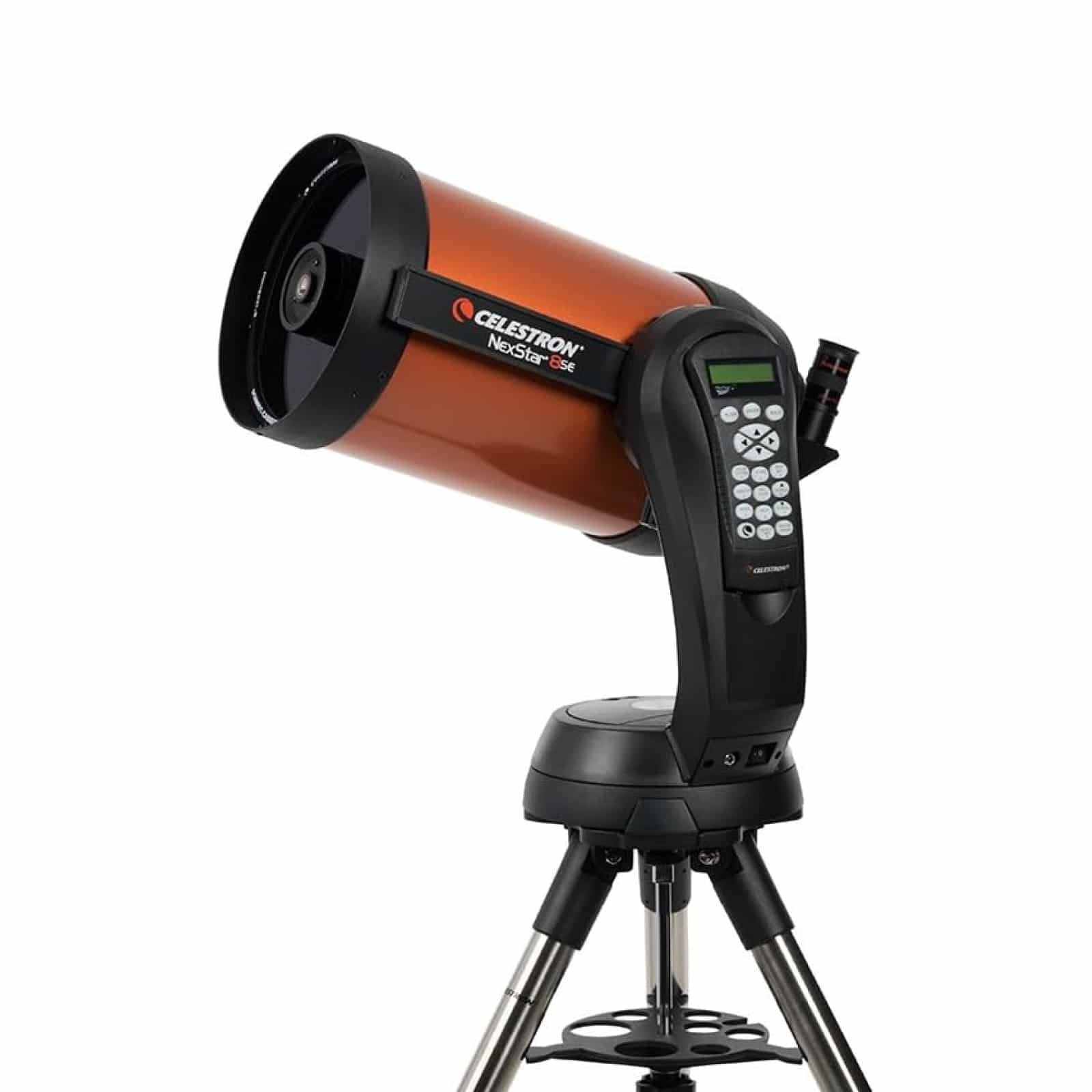
The Celestron Telescopes for Beginners NexStar 8SE is the gold standard for those who want a fully automated experience from night one. Featuring the iconic orange tube, this Schmidt-Cassegrain telescope combines a large 8-inch aperture with a compact, portable design that is easy to store. The computerised GoTo system is the standout feature, allowing the telescope to find and track objects automatically.

Setting up is a breeze thanks to the SkyAlign technology, which allows you to align the telescope by simply pointing it at three bright stars. You don't even need to know the names of the stars, making it the most accessible high-tech option for complete novices. Once aligned, the NexStar+ hand control gives you access to a database of over 40,000 celestial objects at the touch of a button.

The 8-inch aperture is a powerhouse of light, revealing details in the Orion Nebula and the Cassini Division in Saturn's rings that smaller scopes miss. Because it uses a folded optical path, the tube is much shorter than a traditional refractor of the same focal length, making it highly portable. This premium optical design ensures that you won't feel the need to upgrade your equipment for many years to come.

While it represents a higher initial investment, the inclusion of professional-grade tracking and a massive object database justifies the cost for serious beginners. The California-based support team and a 2-year warranty provide peace of mind that your investment is protected by experts. It is the ultimate choice for those who want technology to handle the difficult parts of astronomy so they can focus on the view.

Pros

  • Fully automated GoTo object tracking system
  • Large 8-inch aperture for professional views
  • SkyAlign tech makes calibration incredibly fast
  • Compact Schmidt-Cassegrain design is very portable
  • Huge database of 40,000 celestial targets
  • Backed by a 2-year expert warranty

Cons

  • Requires constant battery or power supply
  • Most expensive option for a beginner
  • Computer system has a slight learning
  • Heavier than manual entry-level telescopes
Pick #5

Overall Grade

C+

7.5/10

Planetary Clarity
72%
Light Gathering
73%
Setup Simplicity
77%
Value for Money
77%
Customer Feedback & Satisfaction​
70%
Overall Analysis

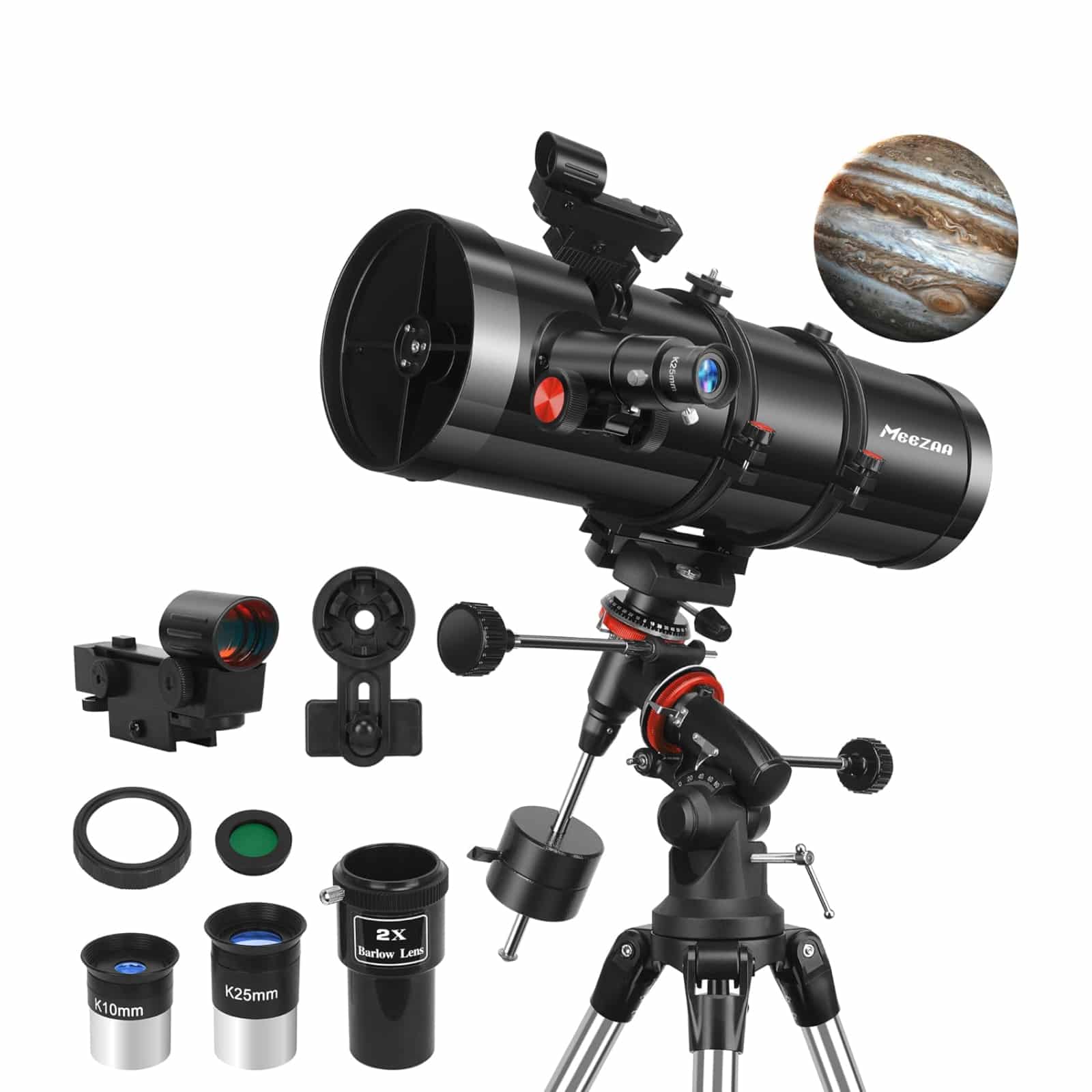
The MEEZAA Telescopes for Beginners offers a robust 150mm aperture reflector that prioritises high-quality optics for deep-space observation at an accessible price. This model is perfectly suited for adults who are interested in the technical side of astronomy and want a hands-on experience. The German Equatorial Mount included with this kit allows for the smooth, manual tracking of stars as they move across the sky.

Equipped with fully coated glass, the MEEZAA ensures that the images of the moon and planets are crisp and free from the hazy glow found in lower-quality mirrors. The slow-motion controls are particularly well-damped, providing a steady viewing experience even when the telescope is pushed to its higher magnification limits. This mechanical precision is vital for beginners who are learning how to navigate the celestial sphere manually.

The package includes a 2X Barlow lens, which effectively doubles the magnification of the included 25mm and 10mm eyepieces, offering four different zoom levels. This versatile accessory kit means you can switch from viewing the entire moon to zooming in on specific crater chains in seconds. The stainless steel tripod is height-adjustable, ensuring that both children and adults can observe comfortably without straining their backs or necks.

For those who enjoy the process of discovery, this manual reflector provides a more traditional astronomical experience than computerised alternatives. It encourages the user to learn the constellations and understand the mechanics of the night sky, which many find to be a more rewarding way to enjoy the hobby. The 24/7 technical support ensures that help is always available if you encounter any difficulties during your first few nights under the stars.

Pros

  • 150mm aperture provides excellent light gathering
  • German Equatorial mount for precise tracking
  • Includes a 2X Barlow for zoom
  • Adjustable stainless steel tripod for comfort
  • Comes with a helpful moon filter

Cons

  • Manual tracking requires more user effort
  • Reflector design needs occasional mirror care
  • Not suitable for daytime land viewing
  • Large size makes storage more difficult
  • Finderscope requires careful initial alignment
❓What is Telescopes for Beginners

Telescopes for beginners are specialised optical instruments designed to provide high-quality views of the cosmos while remaining easy to operate for non-experts. These devices typically fall into two categories: refractors, which use lenses, and reflectors, which use mirrors to gather light.

The primary purpose of these tools is to magnify distant objects and, more importantly, to collect more light than the human eye can, revealing faint details. Modern beginner models often include smartphone integration to allow for easy photography and sharing of celestial events.

Quality entry-level units focus on stability and ease of assembly, ensuring that the user spends more time observing than troubleshooting. They often come as complete kits including tripods, multiple eyepieces, and educational materials to jumpstart the hobby.

Choosing the right type depends on whether the user prioritises portability and terrestrial use (refractors) or maximum light-gathering for deep-space objects (reflectors). Both types in 2026 offer significantly better optical coatings than previous generations, providing clearer and brighter views for all.

⭐ Benefits of Using Telescopes for Beginners

  • Educational Growth: Encourages interest in science, technology, engineering, and mathematics for all ages.
  • Stress Reduction: Provides a peaceful, meditative hobby that connects users with the natural universe.
  • Family Bonding: Offers a unique activity that parents and children can enjoy together outdoors.
  • Astrophotography: Allows users to capture and share stunning images of the moon and planets.
  • Terrestrial Viewing: Many models double as high-powered spotting scopes for birdwatching and nature.
  • Portability: Modern designs are lightweight enough for camping trips and dark-sky site visits.
  • Skill Acquisition: Teaches valuable lessons in patience, precision, and celestial navigation techniques.
  • Instant Gratification: High-quality optics provide immediate "wow" moments from the very first night.

✅ Things To Consider When Choosing Telescopes for Beginners

  • Aperture Size: The most important factor for determining how much detail you can see.
  • Mount Type: Choose between simple Altazimuth or more complex but trackable Equatorial mounts.
  • Portability Needs: Consider if you will be observing from home or travelling to sites.
  • Ease of Setup: Look for tool-free assembly if you want to avoid technical frustration.
  • Included Accessories: Check for eyepieces, Barlow lenses, and phone adapters to save money.
  • Optical Coatings: Ensure lenses are fully coated to maximise light transmission and clarity.
  • Budget Constraints: Balance the initial cost with the long-term value and durability provided.

❗️ What To Avoid When Choosing Telescopes for Beginners

  • Buying for Magnification: Avoid scopes marketed solely on high zoom without a large aperture.
  • Shaky Tripods: Steer clear of lightweight plastic mounts that vibrate with every touch.
  • Ignoring Collimation: Be aware that reflectors require occasional mirror alignment to stay sharp.
  • Over-Complication: Don't buy a complex GoTo system if you prefer manual learning.
  • Poor Finderscopes: Ensure the finderscope is high quality or target acquisition will be difficult.
Meet your Key Analyst

By

Noah Bishop - Research Specialist

Noah Bishop is a dedicated Product Analyst with over 12 years of experience in optical engineering. He has personally tested over 150 telescopes to help beginners find the perfect balance of performance and ease.